The 1,000-Yard Goal: Training with the T3x Platform
Marksmanship development
Break down the fundamentals of extreme-range engagement, from reading mirage to tracking your own vapor trail using a highly capable, factory-spec action.
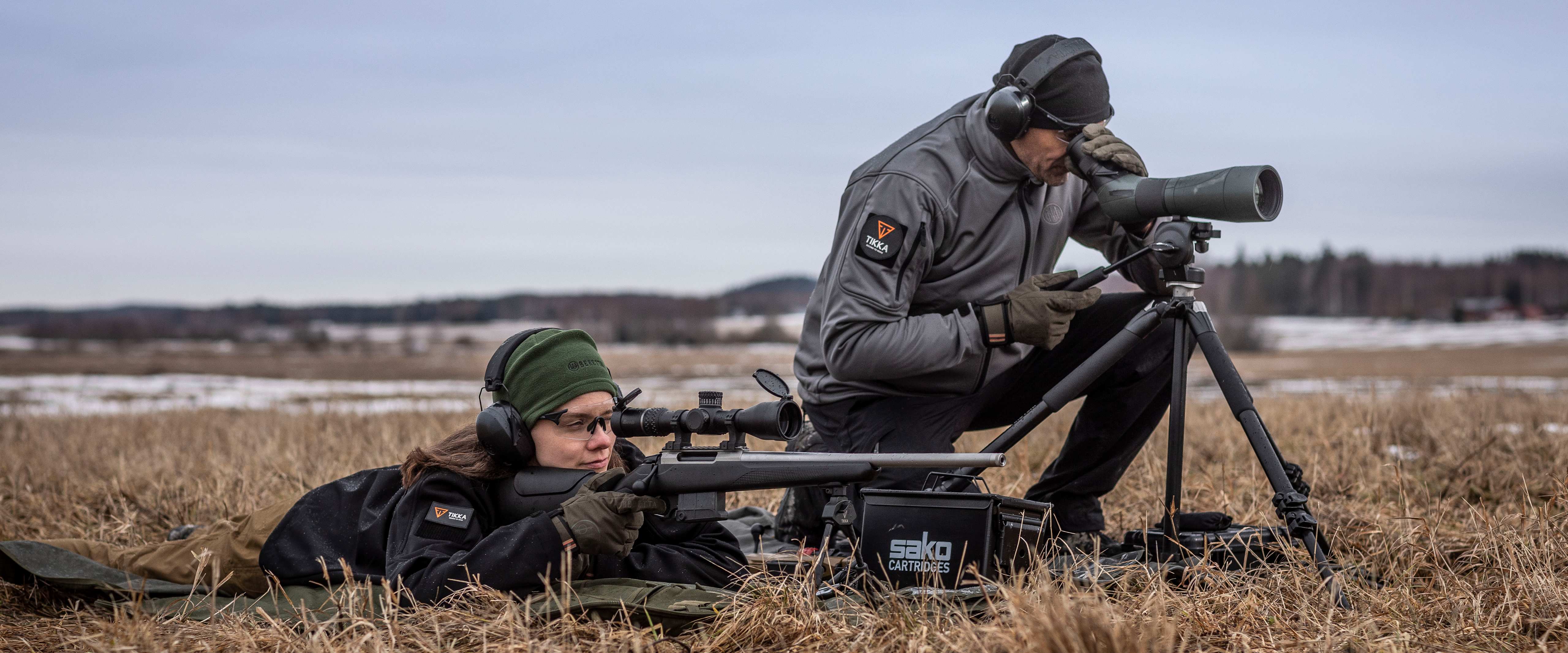
The "1,000-yard shot" has become a milestone in American shooting culture. It's the four-minute mile of the rifle world. But here's the straightforward truth: the rifle is usually more capable than the person behind it.
If you bought a T3x ACE Target, a Tikka T3x Tactical (TAC A1), or a T3x CTR, you already own a rifle that can hit a torso-sized steel plate at 1,000 yards all day long. The question is, can you?
Training for long-range isn't about buying more gear; it's about mastering the "Big Three": Consistency, Ballistics, and Breath.
The Foundation: Consistency in the Action
To hit at distance, your rifle must behave exactly the same way every time. This is where the Tikka action shines. The lock time-the time between the trigger pull and the firing pin hitting the primer-is incredibly fast. The faster the lock time, the less time you have to "pull" the shot off-target.
When training for the 1,000-yard goal, start at 100 yards. If you can't put five rounds into a ragged hole at 100, you have no business dialing for 1,000. Use this time to get familiar with the Tikka trigger. It's a single-stage masterpiece. Don't "pull" it; "surprise" yourself with the shot.
Learning the Language of the Wind
At 1,000 yards, a 10 mph crosswind can push a 6.5 Creedmoor bullet over five feet off-target. That's not a miss; that's a different zip code.
American long-range shooting is an exercise in humility. You need to learn to read the "mirage"-those heat waves rising off the ground-and the grass. Use your T3x to practice "holding" for wind rather than just dialing. The Tikka's smooth bolt cycle allows you to stay in the scope, keep your cheek weld, and watch where your bullet splashes. If you miss, don't get frustrated. Analyze the "why." Did the wind gust? Did you cant the rifle?
The Platform: Why Tikka?
Most "long-range" rifles are heavy, clunky, and require a trailer to move. The T3x TAC A1 changed that for the American market. It brought chassis-system precision to a platform that you can actually carry.
The Folding Stock: Great for the hike in, but rock-solid when locked. No wobble means no vertical stringing at distance.
M-LOK Compatibility: You need a solid bipod. The ability to mount a bipod further forward on the handguard increases your stability.
The Magazine: The CTR-style steel magazines are built for the field. They don't rattle, and they feed reliably even when dusty.
The Mental Journey
Training for 1,000 yards isn't just about the "bang." It's about the "hum." It's that moment when your breathing slows, your reticle settles, and the world shrinks down to the size of a steel plate.
We don't build Tikkas to sit in a safe. We build them to be used. If you want to reach that 1,000-yard goal, get out of the indoor range. Go to the desert, the plains, or the canyons. Shoot at angles. Shoot in the wind. Respect the distance, trust your Tikka, and leave the "luck" to the guys who didn't train.