The Ounce-Counter’s Guide: Building a Sub-7lb Mountain Rig
Built for the backcountry
Learn how to audit your components, select lightweight stock configurations, and shed critical grams without sacrificing action rigidity or cold-bore accuracy.
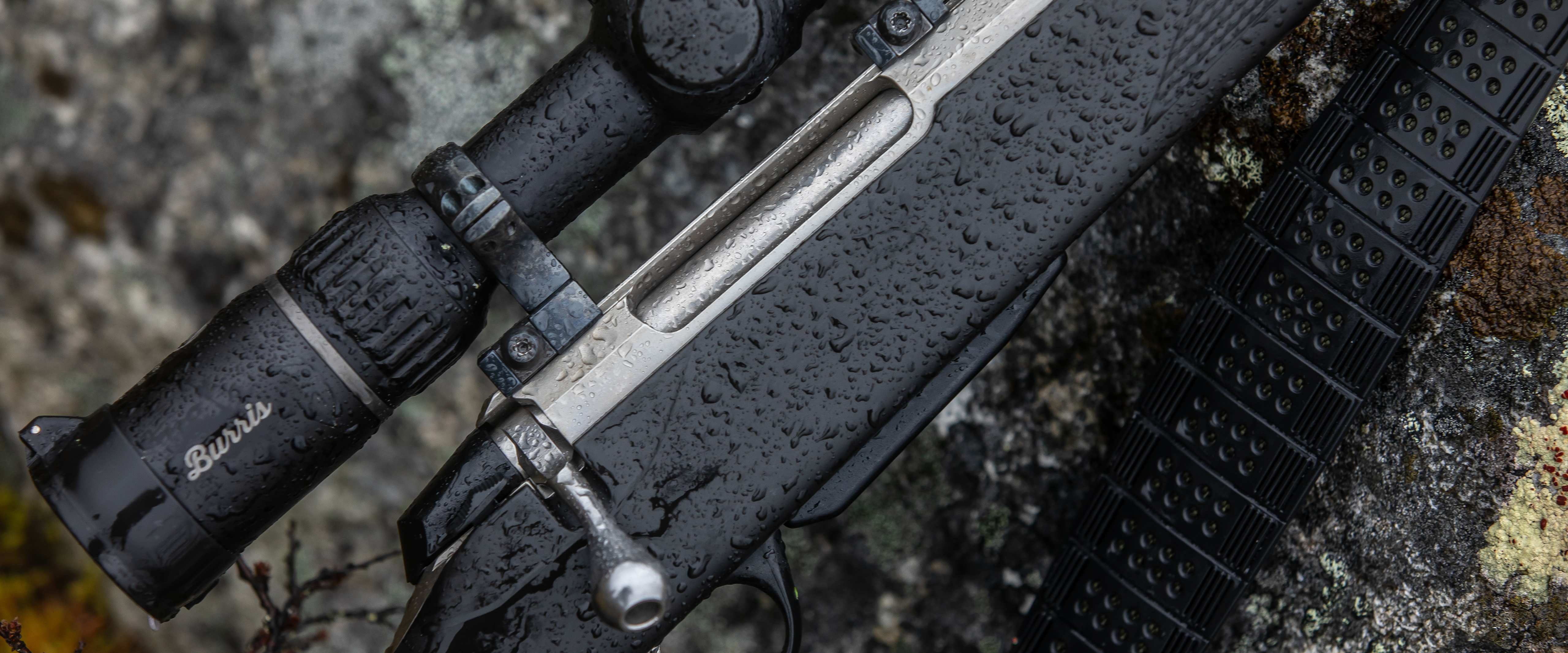
Every mountain hunter knows the brutal reality of the high country: gravity is a non-negotiable opponent. When you are logging miles in the backcountry, scraping your boots up 2,000 vertical feet of shale before the sun even breaches the ridge, every single ounce in your pack is an extraction from your physical and mental bank account. By day four of a wilderness expedition, an 11-pound rifle doesn't just feel heavy—it feels like a liability.
This reality has driven the American market toward the "ultralight" craze. But let’s get straight to the point: shaving weight is easy; maintaining mechanical integrity and a 1 MOA guarantee while doing it is an entirely different caliber of engineering. Many manufacturers cut ounces by making stocks that flex under the weight of a bipod or thin-profile barrels that "walk" your shots six inches as soon as they get warm.
When your goal is a true sub-7-pound mountain rig—including your optic, rings, and an empty magazine—you cannot afford to compromise on rigidity. You need a rifle system engineered to be light on your back but rock-solid when you sink into a prone position on a rocky ledge.
The Foundation: Choosing the Right Barreled Action
You cannot build a sub-7-pound system starting with a bloated action. The foundation of the ultimate American mountain rifle begins with a platform designed from the ground up around lean, no-nonsense precision—like the Tikka T3x Superlite or the T3x Lite RoughTech.
Tikka approaches lightweight design through structural optimization rather than just drilling speed holes in metal. The T3x action is notoriously rigid, featuring an enclosed ejection port that retains maximum receiver strength while shedding bulk. There is zero wasted steel, zero excess mass.
Furthermore, the T3x action utilizes a two-lug bolt with a short 70-degree bolt lift. This isn't just about speed; it keeps the bolt handle clear of oversized mountain optics, allowing you to cycle a follow-up shot smoothly without slamming your knuckles into your scope turrets.
The Cold-Hammer Forged Spine
The barrel profile on a mountain gun is a delicate balance. Tikka refuses to use carbon-wrapped barrels with paper-thin steel liners that lose their point-of-impact zero after two quick shots. Instead, we use a slim, optimized profile of proprietary steel that is cold-hammer forged at our factory in Riihimäki.
The hammer-forging process work-hardens the steel from the inside out, creating a highly dense, uniform internal structure. This ensures that even with a lean, fluted mountain-contour barrel, the first-shot cold-bore impact and the immediate follow-up shot land in the exact same hole. We don't build barrels for high-volume magazine dumps; we build them to deliver lethal precision on the single most important shot of your season.
Stock Selection: Rigidity Without the Bulk
If you want a rifle that sits comfortably under that 7-pound threshold, your stock needs to be light, but it absolutely must remain rigid.
The synthetic stock on the T3x Superlite or the textured RoughTech is a masterclass in modern polymer engineering. Instead of using cheap, hollow plastic injection molds that twist under hand pressure, Tikka stocks are internally reinforced to counteract the specific directional forces of high-recoil magnum cartridges like the 7mm PRC or 7mm Rem Mag.
Material & Manufacturing Process
- Tikka T3x Modular Stock: Built from a robust glass-fiber reinforced polymer, providing excellent structural integrity.
- Low-Tier Composite / Injection Shells: Made from direct injection-molded plastic, which results in a cheaper, less rigid shell.
Bipod Loading Flex
- Tikka T3x Modular Stock: Features zero flex. The barrel remains fully free-floated even when heavy pressure is applied to a bipod.
- Low-Tier Composite / Injection Shells: Suffers from high flex, causing the stock to twist and press against the barrel under a load, which can hurt accuracy.
Bedding Connection
- Tikka T3x Modular Stock: Uses a hardened steel recoil lug interface to create a rock-solid, repeatable connection to the action.
- Low-Tier Composite / Injection Shells: Relies on direct action-to-composite contact, which allows the plastic to compress over time and loosen the fit.
Internal Acoustics
- Tikka T3x Modular Stock: Equipped with a foam-dampened interior core to absorb vibrations and deaden sound.
- Low-Tier Composite / Injection Shells: Leaves a hollow shell that acts like a megaphone, amplifying the sound of branches and trail brush scraping against it.
When you sink prone into a shale slide and "load" your bipod, a lesser synthetic stock will flex, causing the forend to touch the barrel. That contact destroys your harmonics, resulting in a missed shot at 400 yards. Tikka’s reinforced matrix remains dead-rigid, maintaining a perfectly free-floated barrel under any field position.
Component Level Ounce-Counting: Optics and Mounting Systems
You can buy a 5.9-pound bare rifle, but if you slap a 34mm tactical optic with steel rings and a heavy steel bipod on it, you’ve completely blown your mountain rig budget. To stay sub-7 pounds all-in, every component must pass the trial of necessity.
1. Optic Selection
Resist the urge to mount a heavy, high-magnification tactical behemoth on a mountain rifle. You do not need a 5-25x56mm scope with a 34mm main tube to take an ethical shot on a mule deer or bighorn ram. Those optics easily weigh 30 to 40 ounces alone.
Instead, look for a high-end hunting scope with a 1-inch or 30mm tube, such as a 3-9x40mm or a 4-12x44mm, weighing between 14 and 19 ounces. Prioritize glass quality and light transmission over massive turrets. High-quality glass allows you to resolve low-light details in the timber at dawn far better than an oversized objective lens made of cheap material.
2. Mounting Hardware
Ditch the heavy steel Picatinny rails and heavy tactical rings. The T3x action features an integrated, machined 16mm dovetail rail directly on top of the receiver. By utilizing dedicated, lightweight aluminum rings designed specifically to lock onto this interface, you eliminate an entire failure point (the base screws) and save significant weight. It keeps the optic low, aligned, and securely connected to the receiver's steel spine.
3. Field Accessories
Ditch the permanently mounted, heavy steel bipods. If you need a bipod for the high country, use an ultralight carbon fiber option with a quick-detach mechanism, or practice shooting directly off your hunting backpack. Your pack is already on your back; filling it with extra clothes or gear creates an incredibly stable, vibration-dampening shooting rest that requires zero extra ounces on your rifle.
Managing Recoil in an Ultralight Rig
Let’s talk straight: physics is brutal. When you fire a high-performance modern cartridge like a 7mm PRC or a .300 Win Mag out of a rifle system that weighs less than 7 pounds, the recoil impulse is fast and sharp. Recoil fatigue can cause even the most experienced marksman to anticipate the shot, leading to a flinch.
Tikka manages this reality through advanced geometry and technical materials:
- Straight Stock Geometry: The comb of the T3x stock is designed to bring the recoil impulse straight back into your shoulder pocket rather than driving the rifle upward into your cheekbone. This keeps your eye behind the glass through the shot, allowing you to track the bullet's impact or spot your own trace.
- Advanced Recoil Pad: A lightweight mountain rig demands a quality pad. The T3x comes factory-equipped with an improved recoil pad that features an engineered internal structure to swallow the sharp "bite" of magnum calibers, keeping your shoulder fresh through zeroing and confirmation.
- The Factory Fluted Thread: Running a lightweight barrel doesn't mean you can't suppress or brake it. Many T3x mountain configurations come factory-threaded, allowing you to run a highly efficient multi-port brake that vents gasses outward, cutting perceived recoil by up to 40%.
The Ultimate Checklist for the Sub-7lb Build
To ensure your setup hits the exact operational specifications needed for the vertical mile, use this real-world weight budget:
- Bare Rifle (Tikka T3x Superlite / Lite fluted configurations): ~5.7 to 5.9 lbs
- Lightweight Hunting Optic (30mm tube, max 44mm objective): ~15 to 18 oz (~1.0 to 1.1 lbs)
- Direct-Mount Aluminum Rings (Talley-style or Tikka direct): ~2 to 3 oz (~0.15 lbs)
- Empty Flush Magazine: Included in bare rifle weight.
Total All-In Weight: ~6.85 to 7.15 lbs.
When you are miles from the nearest trailhead, staring at a 3,000-foot climb with a storm rolling in over the peaks, you will not regret a single ounce you trimmed from your rifle setup. But when you finally crest that ridge and look down the crosshairs at a record-book buck, you’ll be glad you carried a Tikka—an ultralight rifle that leaves all compromises behind when it's time to pull the trigger.