The 6.5 Creedmoor vs. .308: Choosing Your Deer Woods Legacy
Ballistic performance
Strip away the marketing debate and look at the raw terminal ballistics, recoil impulses, and section density required to choose your ultimate white-tailed deer platform.
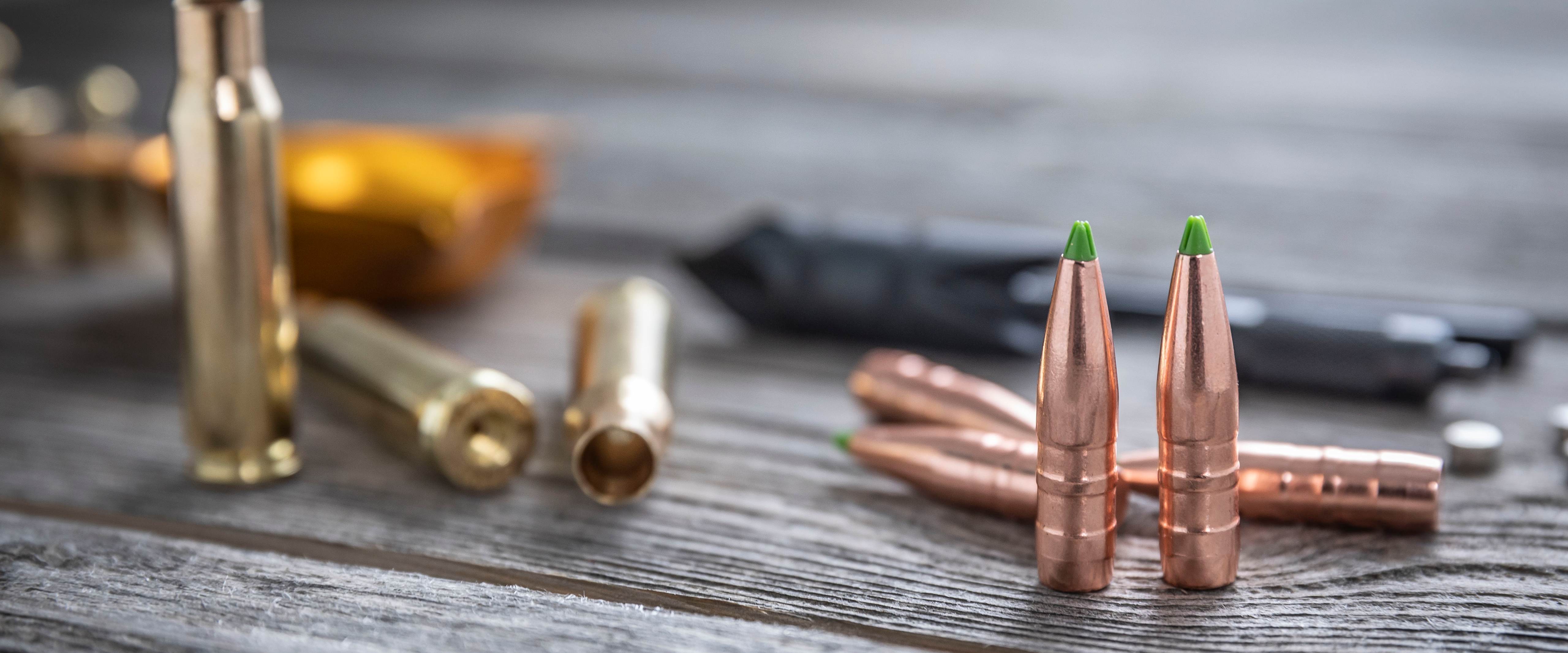
If you want to start a heated debate that will last long after the campfire has burned down to coals, just ask a group of American hunters to pick between the legacy of the .308 Winchester and the modern ballistic profile of the 6.5 Creedmoor. Every deer camp from the big timber of Pennsylvania to the wide-open senderos of South Texas has its factions. One side swears by the blue-collar, heavy-hitting authority of the .30-caliber; the other points to the surgical efficiency, low recoil, and flat trajectories of the modern 6.5mm.
Let’s drop the internet forum noise and look at the straight mechanical facts. When you look at these two cartridges through the lens of a Tikka T3x action, the choice isn't about which cartridge is "better" on paper—it’s about matching the cartridge's physical behavior downrange to the terrain you hunt, the distance of your shots, and how you want your rifle to react when the trigger breaks.
The Mechanical Baseline: The T3x Short-Action Advantage
Before diving into bullet weights and ballistic coefficients, look at how these rounds function inside the rifle. Tikka does something unique with the T3x platform. Unlike other manufacturers who build entirely different receiver sizes for short, long, and magnum cartridges, Tikka utilizes a single, standardized, ultra-rigid receiver size.
We scale the internal operational parameters to the cartridge family by using caliber-specific magazines and modular bolt stops. What does this mean for the hunter in the woods? It means whether you choose the .308 Win or the 6.5 Creedmoor, you are getting the exact same ultra-rigid receiver spine, the same buttery-smooth 70-degree bolt lift, and a cyclic stroke that is geometrically optimized for that specific round. There is zero slop, zero wasted movement, and 100% mechanical reliability when you need a fast follow-up shot in thick brush.
The Veteran: .308 Winchester and the Authority of Mass
The .308 Winchester is the blue-collar king of the American deer woods, and its reputation has been earned over seven decades of real-world performance. It is a cartridge born from military necessity but perfected in the hands of woodsmen.
1. Terminal Performance in the Timber
The defining characteristic of the .308 Win is mass and frontal diameter. When you are shooting traditional deer weights—typically from 150 to 180 grains—you are sending a massive, hard-hitting projectile downrange.
In thick timber, where shots are often inside 150 yards and require fast presentation, the .308 Win provides immediate, violent energy transfer. It punches a wide wound channel and delivers deep penetration, even when encountering heavy bone on a mature, big-bodied Midwest whitetail. If your style of hunting involves sitting in a climbing stand over a tight cedar opening or tracking bucks through dark timber, the .308 Winchester is an incredibly forgiving tool.
2. Real-World Practicality
Let's talk straight about logistics. You can walk into any rural hardware store, bait shop, or big-box sporting goods outlet in North America and find a box of .308 Win. It is impervious to supply chain disruptions. Furthermore, because it operates at a highly stable pressure curve, it is inherently efficient in shorter barrels. A .308 Win chambered in a handy, fast-handling rig like the T3x Compact or the T3x Lite loses very little velocity when the barrel is trimmed down, making it the ultimate setup for a tight tree stand or a blind.
The Challenger: 6.5 Creedmoor and Ballistic Efficiency
The 6.5 Creedmoor was originally engineered for long-range target standard performance, but American hunters quickly realized that the exact same attributes that win precision matches make it lethal in the deer woods.
6.5 Creedmoor Profile:
High Ballistic Coefficient => Resists crosswind drift => Retains velocity and energy further downrange
1. The Physics of the Long Shot
While the .308 relies on raw mass, the 6.5 Creedmoor relies on aerodynamic efficiency. A typical 6.5mm hunting bullet weighs between 120 and 143 grains. Because these bullets are long and sleek, they possess a significantly higher Ballistic Coefficient (BC) than traditional .30-caliber projectiles of similar weight classes.
When you push out past the 200-yard mark—glassing beanfields, powerlines, or big agricultural edges—the physics shift heavily in favor of the Creedmoor. The 6.5mm cuts through crosswinds with far less drift, and its trajectory remains remarkably flat. Because it retains its velocity so efficiently, it carries its kinetic energy further downrange. At 400 yards, a 143-grain 6.5mm bullet is often traveling faster and carrying comparable or greater energy than a traditional .308 bullet, despite starting with less mass at the muzzle.
2. Recoil Mitigation and Shot Spotting
The most significant field advantage of the 6.5 Creedmoor is its low recoil impulse. Physics dictates that for every action, there is an equal and opposite reaction. Launching a lighter, narrower bullet requires less powder volume, cutting perceived recoil by roughly 30% to 40% compared to a .308 Win.
- Typical Velocity - ~2,700 FPS (165gr .308 win), ~2,700 FPS (143gr 6.5 CM)
- Perceived Recoil - Moderate / Standard (165gr .308 win), Low (30-40% reduction) (143gr 6.5 CM)
- Wind Drift (10 mph at 400 yds) - ~13.5 inches (165gr .308 win), ~9.5 inches (143gr 6.5 CM)
- Optimal Barrel Twist (Tikka) - 1:10" (165gr .308 win), 1:8" (143gr 6.5 CM)
For the hunter, this isn't just about avoiding a sore shoulder; it's about sight picture retention. When you pull the trigger on a lightweight rifle like the T3x Lite RoughTech chambered in 6.5 Creedmoor, the muzzle rise is so minimal that you can easily stay behind the glass through the entire recoil cycle. You can watch your bullet trace through the air, spot the impact on the quarry, and immediately know if a follow-up is required.
Matching the Barrel Twist to Your Bullet Choice
Whether you choose the .30-caliber or the 6.5mm, your rifle must be engineered to stabilize the specific bullets you run in the field. This is where Tikka's commitment to factory-perfect rifling parameters makes the difference.
- Tikka 6.5 Creedmoor (1:8" Twist): We build our 6.5 Creedmoor barrels with a fast 1:8" twist rate. This is designed explicitly to stabilize heavy-for-caliber, high-BC hunting bullets (like the 140gr to 147gr class) or monolithic, lead-free copper projectiles, ensuring they fly true in dense, freezing late-season air.
- Tikka .308 Winchester (1:10" Twist): Our .308 barrels utilize a 1:10" twist, which is the mechanical sweet spot for standard 150-grain to 168-grain whitetail loads. It provides clean stabilization without over-spinning, maximizing barrel life and maintaining tight, sub-MOA uniformity.
The Verdict: Defining Your Legacy
When it's time to choose the cartridge that will line the stock of your T3x, look at the geography of your hunt and leave the emotional arguments behind.
- Choose the .308 Winchester if your deer hunting is defined by deep woods, river bottoms, and tree stands where shots are fast and close, or if you want a time-tested platform where ammunition can be sourced anywhere from Alaska to the local gas station. It is the king of the short-range hammer.
- Choose the 6.5 Creedmoor if you hunt open country, agricultural fields, or mountain ridges where wind is a factor and distances routinely stretch past 200 yards. It is also the correct choice for recoil-sensitive shooters, youth hunters, or anyone who values the ability to stay locked inside the optic through the shot to confirm terminal placement.
At the end of the day, both cartridges have written their names across the history of American hunting. What matters most is that when you slide that round into a Tikka action, you know exactly what that bullet will do downrange. No guesswork, no compromises—just a clean, ethical shot.