The Technical Edge: Optimizing the T3x Platform for Low-Light Whitetails
Optics and illumination
Maximizing those critical final minutes of legal shooting light requires more than just high-end glass. Explore the geometry of exit pupils, reticle selection, and how to configure your rifle for rapid target acquisition when the shadows deepen.
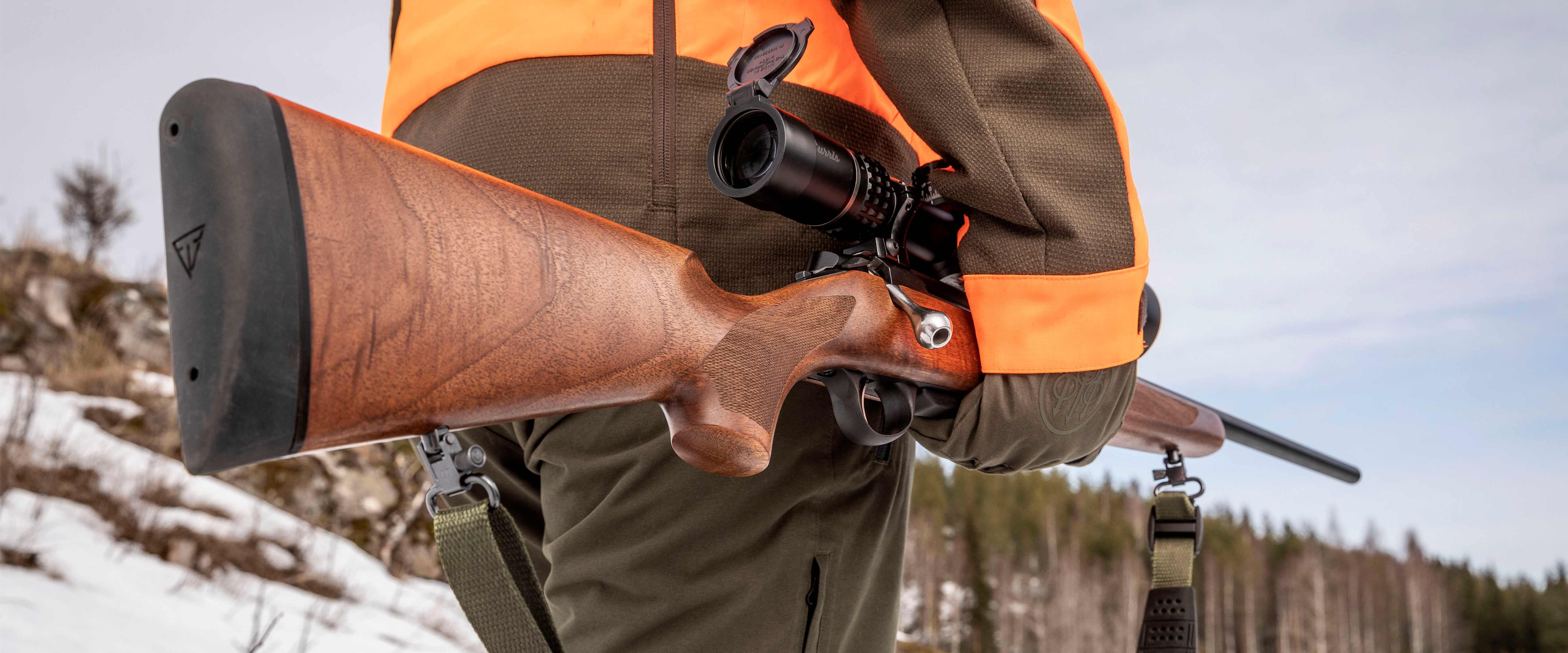
Ask any veteran whitetail hunter where the magic happens, and they won’t tell you about a blue-sky noon. They’ll talk about the last thirty seconds of legal shooting light on a raw November evening. They’ll talk about the buck that materializes like a ghost out of a cedar thicket when the shadows have stretched so long that the human eye can barely distinguish a rack from a dead branch.
In the North American deer woods, low light isn't just a factor—it is the factor.
Many hunters spend thousands of dollars on leasing land and planting food plots, only to blow the moment of truth because their rifle setup wasn't technically optimized for the reality of twilight physics. When you’re staring through the timber at a mature buck in the fading grey of dusk, you don’t need an aesthetic safe-queen. You need an engineered system that maximizes light transmission, ensures instantaneous mechanical alignment, and eliminates any potential for human error under stress.
Optimizing your Tikka T3x for low-light whitetail hunting isn't about buying gimmicks; it’s about understanding the technical interface between the hunter, the rifle’s geometry, and the optic’s exit pupil.
The Physics of Twilight: Exit Pupil and Objective Lenses
Let’s talk straight about how your eyes work when the sun goes down. In low-light conditions, the human pupil dilates to its maximum capacity, typically around 7mm for younger hunters, dropping to around 5mm as we age. If your rifle's optical setup cannot deliver a beam of light that matches or exceeds your eye's dilated pupil, the image through the scope will appear dark, muddy, and useless.
If you carry a T3x Hunter or a T3x Lite topped with a standard 3-9x40mm scope, and you have it cranked up to 9x in the final minutes of legal light, your exit pupil is a meager 4.4mm. You are actively starving your eye of light.
To optimize for twilight, you have two technical paths:
- Drop the Magnification: Back your scope down to 4x or 5x. At 4x, that same 40mm scope delivers a massive 10mm exit pupil, completely flooding your eye with every bit of ambient light the glass can gather.
- Step up the Objective: Move to a 44mm or 50mm objective lens with premium anti-reflective coatings. A 50mm objective lens set at 7x power yields a 7.1mm exit pupil—perfectly synchronized with a fully dilated human eye.
The Burris Optical Match: Maximum Transmission
When pairing the T3x with glass built specifically to dominate these final minutes of legal light, Burris Optics offers options engineered precisely for the American whitetail woods. They build heavy-duty hunting optics that offer premium light transmission without the bloated price tag or unnecessary tactical bulk.
For the ultimate low-light whitetail rig, look at the Burris Signature HD 3-15x50mm or the Burris Veracity PH 2.5-12x50mm.
- The Glass Technology: Burris uses index-matched, Hi-Lume multi-coated lenses. This chemical coating is optimized specifically for light transmission at the extreme ends of the spectrum—the blue and red wavelengths that dominate at dawn and dusk. It cuts down ambient glare from a setting sun and ensures that every scrap of usable light is directed straight to your eye.
- Illuminated Reticles: Low-light whitetail hunting introduces a hidden trap: you can see the deer’s body, but your black crosshairs completely vanish against his dark hide. Burris optics configured with the illuminated E3 MoA or Ballistic Plex reticles eliminate this point of failure. By turning on a crisp, finely adjusted red dot at its lowest intensity, you get instant point-of-impact placement without blowing out your night vision.
Mounting Geometry: Achieving the Perfect Cheek Weld
Stepping up to a larger 50mm objective lens like the one on the Burris Signature HD presents a structural challenge: mechanical alignment. A larger objective lens requires higher scope rings to clear the barrel. If your scope is mounted too high, your face leaves the stock of the rifle. You end up with a "floating" cheek weld, forcing your eye to hunt for the center of the optical axis.
In low light, this is catastrophic. If your eye is even slightly misaligned with the scope, you will experience optical parallax and severe shadow vignetting around the edges of your view, obscuring your target.
High Rings / No Cheek Weld => Eye floats => Parallax & Shadow Vignetting => Miss
Low Rings / Solid Cheek Weld => Instant Alignment => Clean, Bright Sight Picture => Hit
The Tikka Solution: Low Rings and the 70-Degree Bolt
The T3x action gives whitetail hunters a distinct mechanical advantage here. Because the T3x utilizes a 70-degree bolt lift instead of the traditional 90-degree throw, you have massive clearance between the bolt handle and the scope's ocular bell.
You can mount your Burris optic significantly lower to the bore than you could on a standard action without worrying about hitting your knuckles on the scope when you cycle the gun. Pair your rifle with dedicated, direct-mount aluminum rings or a robust set of Burris Signature Rings fitted directly to the T3x’s integral 16mm dovetail rail. This removes the unnecessary weight and height of a separate Picatinny rail base, keeping the scope's centerline as close to the barrel as physically possible.
If you are running a rifle with a straight-comb stock like the T3x Lite RoughTech, this low-profile geometric alignment ensures that the moment you shoulder the rifle, your eye is perfectly centered in the optic's sweet spot. No adjustments, no searching—just an instant, crystal-clear view of the vitals.
Mechanical Consistency When Your Hands Are Freezing
Whitetail hunting in November is an exercise in cold management. Sitting motionless in a tree stand or box blind for six hours allows the damp cold to sink deep into your joints. When that buck finally steps out, your hands are stiff, your motor skills are compromised, and your body is fighting a surge of adrenaline.
This is where the direct, uncompromised mechanics of the T3x action prove their worth.
- 70-Degree Bolt Lift - Fast cycling within tight stands; prevents hand impact with large low-light scopes.
- Two-Position Safety - Silent operation; physically locks both the trigger and the bolt handle against brush snags.
- Single-Stage Trigger - Adjustable down to 2 lbs; clean break ensures no trigger freeze with heavy gloves.
- Single-Stack Magazine - Linear feeding directly into the chamber; eliminates the risk of double-feeding or scraping brass.
1. The Crisp, Single-Stage Break
Cold fingers cannot feel a "mushy" trigger. If your trigger has creep, you will inevitably jerk the shot when you think it's about to break. The Tikka trigger is a mechanical benchmark because it features zero creep and zero overtravel. Out of the box, it breaks like a glass rod. It can be adjusted easily down to 2 pounds, allowing you to execute a clean, surprise break even when wearing heavy gloves or when your fingers are numb from the frost.
2. Silent Operations in the Stand
Whitetails have acute hearing, and the cold, dense air of dawn or dusk carries sound with incredible efficiency. A loud "click" of a safety or the rattle of a loose magazine will clear a shooting lane instantly.
The T3x safety is an honest, two-position design that can be manipulated completely silently by keeping upward pressure on the switch with your thumb as you slide it forward. Furthermore, the single-stack polymer magazine feeds linearly and quietly. There is no metallic clatter inside the receiver when you chamber a round, allowing you to prepare for the shot in total stealth.
Technical Summary for the Low-Light Woodsman
To build the ultimate low-light whitetail tool on the T3x platform, structure your gear selections around these precise parameters:
- The Platform: T3x Lite RoughTech or T3x Hunter (weatherproof, synthetic or robust walnut, with enhanced grip textures for wet or frozen hands).
- The Optics Config: A Burris Signature HD 3-15x50mm with an illuminated reticle for clean contrast against dark timber hides.
- The Mount: Direct-to-receiver low rings to maintain a tight bore-to-optic geometry and an immutable cheek weld.
- The Execution: Keep the magnification set to 4x or 5x while waiting in the stand. Only dial up the power if the target is stationary at extended distances and the ambient light allows for it.
At the end of the day, nature does not negotiate, and the deer woods do not care about excuses. When you’re hunting the margins of dawn and dusk, success isn't driven by luck—the mechanical and optical configuration of your rifle dictates it. By matching a precision cold-hammer-forged Tikka action with an optimized low-light optical system, you ensure that when that buck of a lifetime finally steps into the lane, you have the technical edge required to close the book.