The Ultimate Trainer: Why Your Rimfire Should Match Your T3x
Marksmanship development
Build flawless muscle memory and burn identical trigger pulls without the cost or recoil. Learn how a matched rimfire system directly translates to centerfire success.
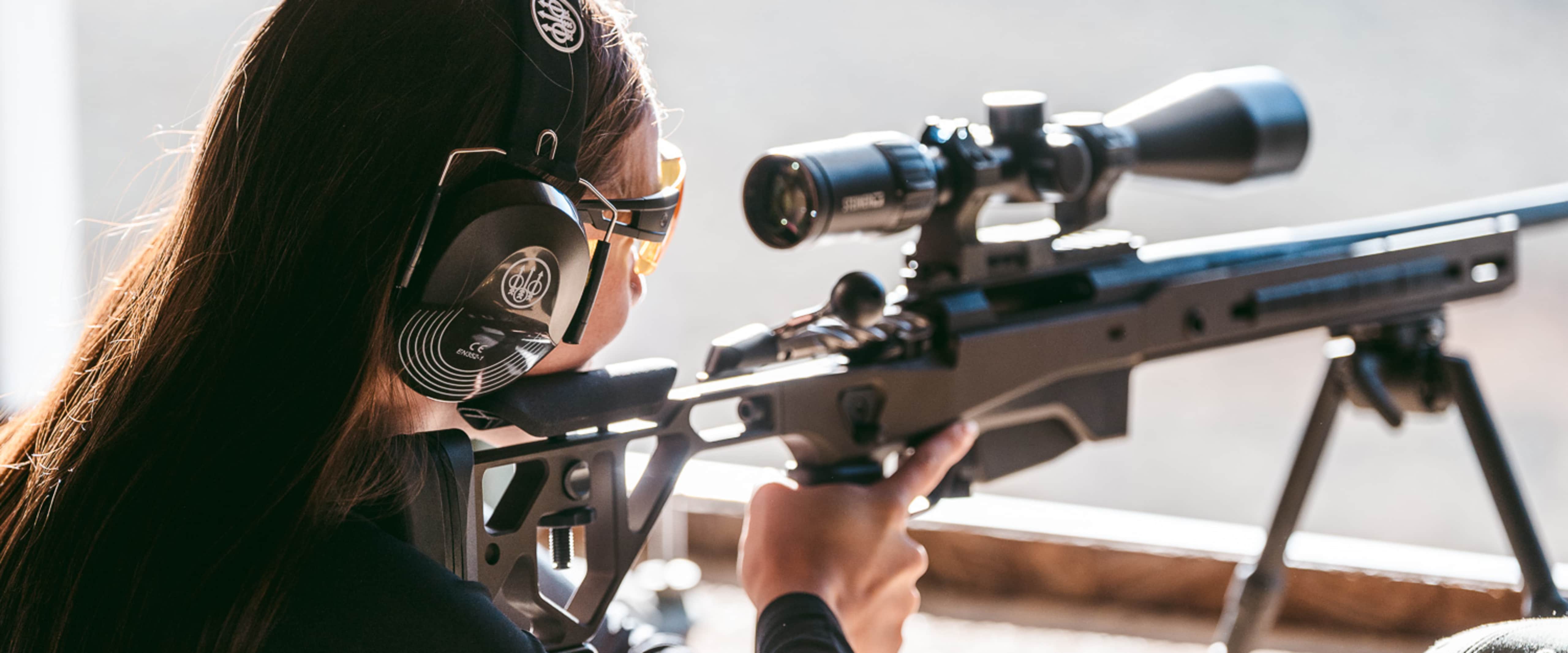
In the world of American hunting, there is a massive gap between "shooting" and "marksman-ship." Any guy can sit at a bench with a lead sled, dial a turret, and punch a hole in paper. But that's not hunting. Hunting is dynamic. It's chaotic. It's breathing hard after a 200-yard sprint to a ridge because the elk are moving, and then having to build a stable shooting position out of a downed log and a backpack.
If you want to master that chaos, you need a training partner. And there is no better partner than the Tikka T1x MTR.
Let's be straightforward: the reason your rimfire should match your T3x isn't just about ergonomics-it's about Economy of Motion. When the pressure is on, you don't want to be "thinking" about your gear. You want your subconscious to take over. By training with a T1x that mirrors your centerfire rig, you are hard-wiring your brain to win.
The 1:1 Logic: Beyond the Bolt
We've talked about the shared 70-degree bolt throw and the identical trigger feel, but let's go deeper. The T1x isn't just a "trainer" because it looks like a Tikka; it's a trainer because it behaves like one.
When you spend your off-season with a T1x, you're training your "eye-box" memory. If you've mounted the same style of optic and used the same length-of-pull spacers as your T3x, your eye finds the center of that glass every single time you mount the rifle. You aren't hunting for the reticle; it's just there. In the timber, that half-second of saved time is the difference between a clean harvest and a "shoulda-coulda-woulda" story at the campfire.
The Hunter's Drill: Building a "Field-Ready" Mindset
To get the most out of your T1x, you need to leave the 100-yard flat range behind. Here are three "straight-talk" drills that will turn you into a lethal Tikka marksman.
1. The "Pulse" Drill
In the high country, you are rarely shooting with a resting heart rate. To simulate this, find a safe range where you can move.
The Drill: Do twenty burpees or a 100-yard dash. Immediately drop into a seated or kneeling position and engage a 3-inch steel plate at 50 yards with your T1x.
The Why: The .22 LR is unforgiving. If your breathing is erratic, that reticle is going to dance. This drill teaches you how to "time" your trigger break between heartbeats. Because the T1x has the same crisp break as your T3x, the muscle memory you develop here-learning to squeeze exactly as the lungs empty-transfers perfectly to your hunting rifle.
2. The "Improvised Stability" Drill
Nature doesn't provide bipods. It provides rocks, stumps, and fence posts.
The Drill: Set up five different "stations" in a field with targets at varying distances (40 to 120 yards). You are not allowed to use a bench or a bipod. You must use your pack, a trekking pole, or a tree limb.
The Why: The T1x is light and maneuverable, just like the T3x Lite. This drill teaches you how to "bind" the rifle into your support. You'll learn that a Tikka stock is rock-solid when you pull it into your shoulder pocket, and you'll find the "dead spots" where the rifle naturally settles. When you're in the mountains with your T3x, you'll automatically know how to "wed" the rifle to a granite boulder for a 300-yard shot.
3. The "Wind-Read" Marathon
As we've said, the .22 LR is a ballistics masterclass.
The Drill: On a windy day, set up a target at 150 yards. This is the "Red Zone" for a .22 LR. You'll likely need to hold 1 or 2 Mils of wind.
The Why: This is where you learn to trust your Tikka's accuracy. If you miss, it wasn't the gun-it was the wind. This drill forces you to watch the "mirage" and the grass. You'll start to see the "signs" of a 10-mph gust before it even hits your position. When you're glassing a beanfield with your T3x in 6.5 Creedmoor, you'll have the "ballistic intuition" to know exactly how much that crosswind is going to move your bullet at 400 yards.
The "Cost of Confidence"
American hunters are notorious for "spending our way" out of problems. We buy the newest camo, the most expensive boots, and the fanciest rangefinders. But you cannot buy confidence.
Confidence is earned through thousands of trigger pulls. The T1x allows you to pull that trigger 500 times a month for the price of a decent steak dinner. That volume of fire builds a level of "intimacy" with the Tikka platform that no custom centerfire can match.
When you finally step out of the truck on opening morning, and you feel the weight of your T3x in your hand, you shouldn't feel like you're carrying a "big gun." You should feel like you're carrying your T1x. The safety is in the same place. The grip feels the same. The trigger breaks the same.
Leaving the Formalities at the Trailhead
At the end of the day, we don't build the T1x and T3x to be separate categories. We build them as a system. We respect the hunter who takes the time to train, because that hunter is an ethical hunter. They know their limits, they know their gear, and they know their target.
Straight talk: If you aren't training with a T1x, you aren't reaching your full potential with your T3x. The rimfire is the "truth-teller." It shows you your flaws without the "mask" of heavy recoil or expensive ammo.
Pick up a T1x. Set it up as a twin to your hunting rig. Shoot it until the bolt cycles like second nature, and the trigger break is as predictable as the sunrise. Then, when the buck of a lifetime steps into that clearing, you won't be "taking a shot." You'll just be doing what you've done a thousand times before.
That's the Tikka Edge. That's why we're here. Second to none.