Understanding Twist Rates for Heavy-for-Caliber Bullets
Internal ballistics
Don't let your bullet tumble. Master the mechanical relationship between rifling twist rates, gyroscopic stability, and the high-BC projectiles required for wind-cheating performance.
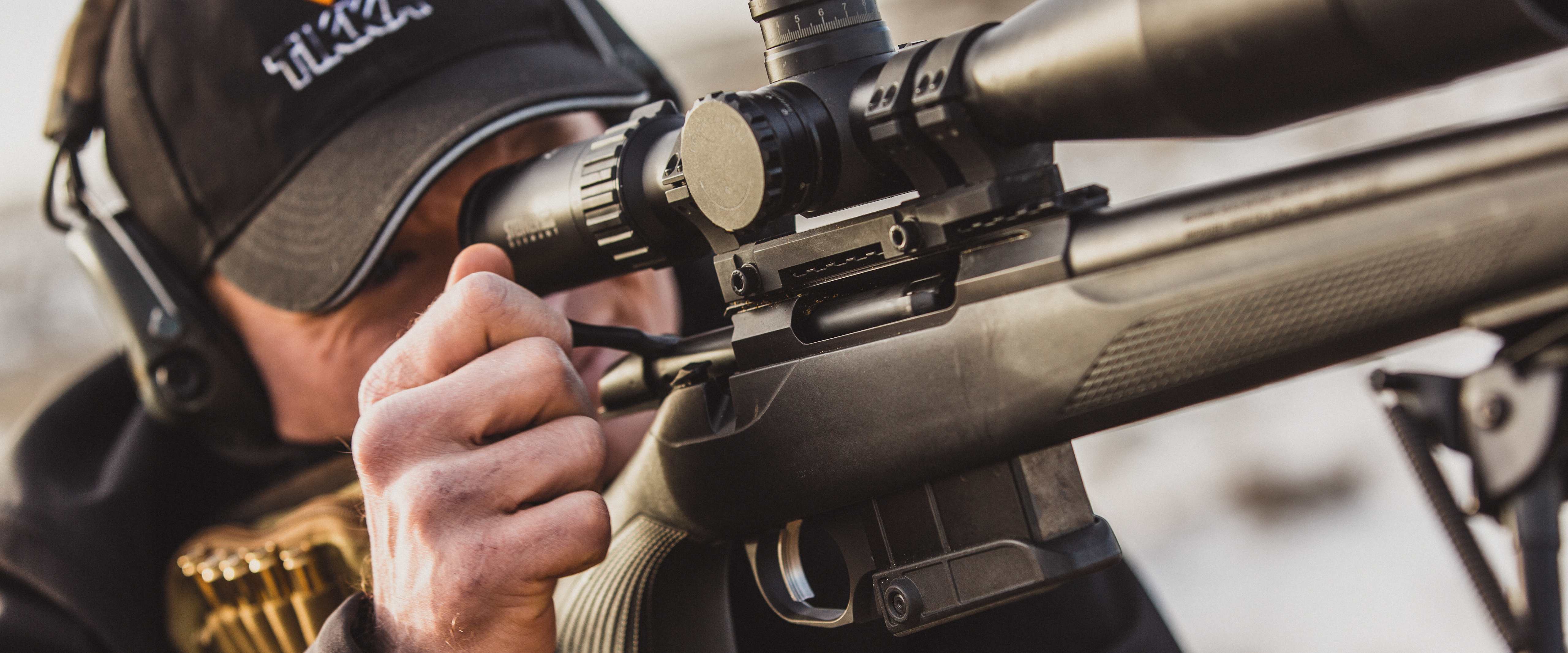
If you spend enough time around a campfire or a gun shop counter in the States, the conversation eventually turns to "twist rates." For some, it's a dark art. For others, it's just a number stamped on the side of a barrel. But for the hunter who wants to push their Tikka T3x to its absolute limit-especially at long range-understanding twist rate is as fundamental as knowing how to read the wind.
Let's drop the formalities. We aren't here to pass a physics exam. We're here because we want to know if that 147-grain ELD-M is going to tumble through the air like a wounded bird or fly like a laser beam when it counts.
The "Football" Analogy: Why We Spin
Think of a bullet like a football. If a quarterback throws a "duck"-a ball with no spin-it wobbles, catches the wind, and falls short of the receiver. If he puts a tight, high-RPM spiral on it, the ball cuts through the air, resists crosswinds, and stays on its axis.
In your Tikka, the rifling is that "spiral." The twist rate (e.g., 1:8" or 1:10") tells you how many inches of barrel it takes for the bullet to make one full 360-degree rotation. A 1:8" twist is "faster" than a 1:10" twist because it spins the bullet sooner.
The Rise of "Heavy-for-Caliber"
For decades, American hunters lived on a diet of standard-weight bullets: 150-grain .30-calibers or 55-grain .22-calibers. But the game has changed. We've realized that long, sleek, "heavy-for-caliber" bullets have a higher Ballistic Coefficient (BC). They don't just hit harder; they stay supersonic longer and drift less in the wind.
But there's a catch: Length requires spin. It's a common misconception that weight determines the necessary twist rate. In reality, it's the length of the bullet. Because lead-free (monolithic) bullets or high-BC target bullets are longer than traditional soft-points, they need a faster twist to keep them from "keyholing" (hitting the target sideways).
The Tikka Advantage: Fast and Honest
At Tikka, we don't build barrels for the "lowest common denominator." We build them for the modern hunter.
Take our 6.5 Creedmoor or .260 Rem barrels. While some manufacturers stuck with a 1:9" twist, Tikka leaned into the 1:8" twist. Why? Because we know our shooters are using 140-grain to 147-grain projectiles. That 1:8" twist ensures that even in the dense, cold air of a late-season hunt in Idaho, your bullet stays stabilized. Cold air is denser than warm air; it tries harder to push your bullet off-balance. A fast twist rate is your insurance policy against "atmospheric drag."
Choosing the Right Match for Your T3x
When you're standing in the aisle of a sporting goods store looking at boxes of ammo, you need to match your choice to the stamp on your Tikka barrel.
The .223 Remington Case: Older rifles often had 1:12" twists, limiting you to tiny 50-grain varmint loads. A modern Tikka T3x in .223 often comes with a 1:8" or 1:10" twist. This is a game-changer. It means you can shoot 69-grain or even 75-grain bullets, turning a "varmint" gun into a legitimate tool for hogs or even deer where legal.
The .30-Caliber Standard: In the .308 Win or .30-06, a 1:10" or 1:11" twist is the sweet spot. It's versatile enough to stabilize everything from a 150-grain whitetail load to a 200-grain "hammer" for moose or bear.
The "Over-Stabilization" Myth: You'll hear old-timers claim that spinning a light bullet too fast will make it "explode" or shoot accurately. Unless you're shooting thin-jacketed varmint bullets at 4,000 feet per second, you aren't going to "over-stabilize" a bullet. It's far better to have too much spin than too little.
The Hunter's Reality
In the field, you aren't thinking about RPMs. You're thinking about the buck. But the reason you can trust a Tikka is that we've already done the math. We've matched our cold-hammer-forged rifling to the ammunition that American hunters actually use.
When we say a rifle is "Sub MOA capable," that's not a marketing slogan. It's a promise that our twist rates, bore diameters, and chamberings are perfectly synchronized. Whether you're shooting a high-BC copper bullet because of local regulations or a heavy lead-core projectile for maximum energy transfer, the Tikka action and barrel are designed to keep that "spiral" tight.
Straight Talk on Twist
Don't get bogged down in the forums. If you want to shoot long-range, go with the fastest twist rate offered for your caliber. It opens the door to heavier bullets, better wind resistance, and more "knock-down" power at distance.
Nature is unpredictable. The wind is going to blow, and the shot is going to be farther than you planned. A heavy-for-caliber bullet stabilized by a precision-twist Tikka barrel doesn't just make you a better shooter, t makes you a more ethical hunter. You owe it to the animal to use the most stable projectile possible. That stability starts in the rifling.